Never lose another ticket. Capture every load on your phone, approve it, and your invoice is ready the same day.
The driver taps it on the phone at the site — before the dust settles.
One tap from you. That is the entire approval step.
Priced, itemised and ready to download the same day. Nobody re-typed a thing.
Tragget is the digital ticket book for any operation running dump trucks — from a single truck to a full fleet. Capture every load on your phone — set up your job once, and every load you log builds your invoice. Approve the ticket and the invoice is finished the same day, ready to download and send. You run it yourself, starting today — the people you haul for don't have to sign up or change a thing, and it grows as your partners join.
Your 30-day trial is genuinely free — no charges during it. After it, every ticket you logged is kept safe; add a subscription or ticket packs to keep viewing and invoicing them — whichever fits your volume.
One ticket carries a job from the moment it's dispatched to the day you're paid — here's each stage, and what it does for you.
1 · Dispatch
Loads are matched and land on the driver's phone with site, material and instructions already filled in.
2 · Tracking
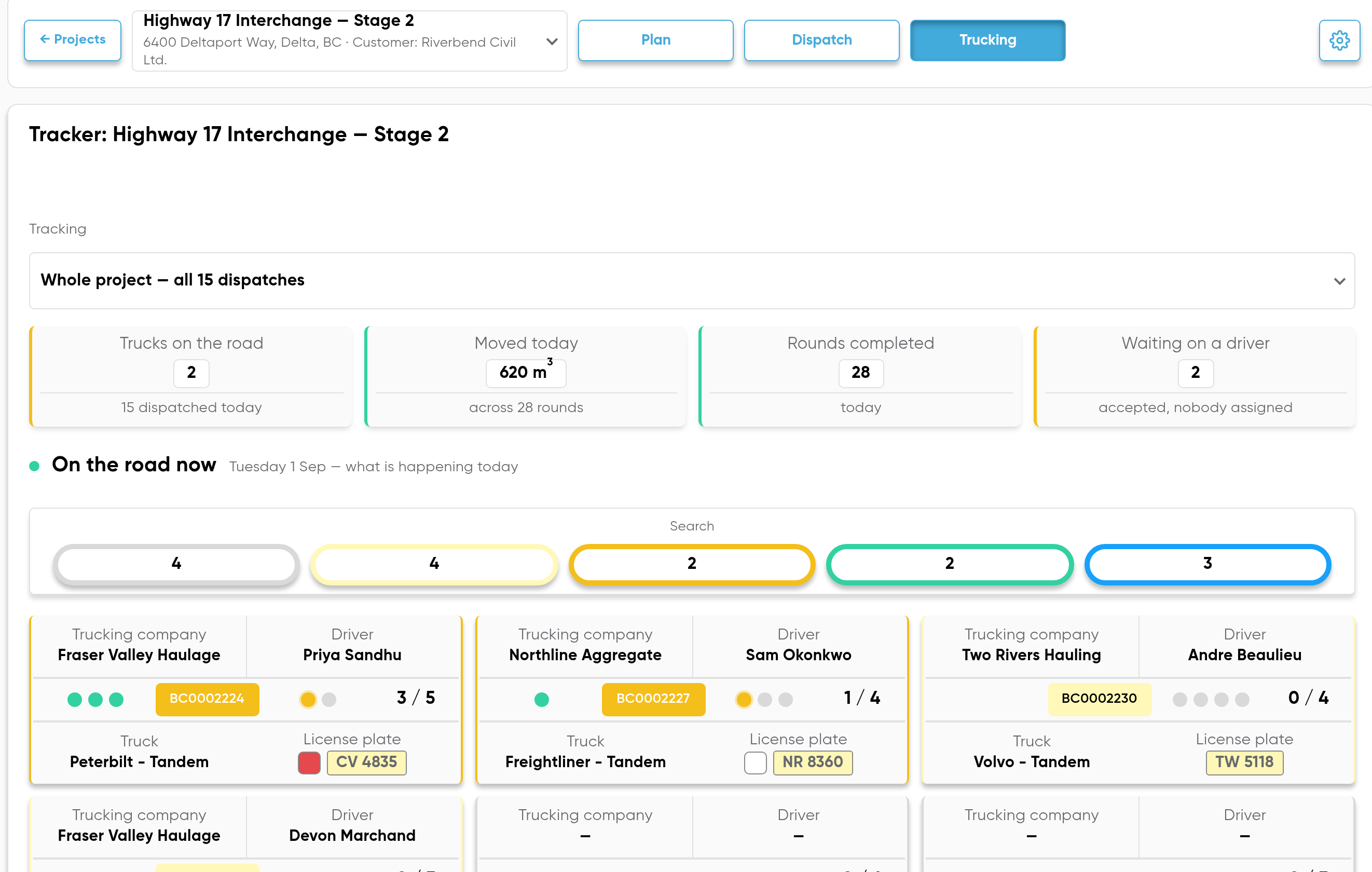
Watch a ticket move from accepted to on-site to done on the project you're running — no calls, no guessing where things stand.
3 · Invoicing
Every load you log builds the invoice. When the job's approved the invoice is finished the same day, ready to download and send — nothing missing, nothing unbilled.
4 · Communication
Drivers, brokers and projects share the same live record — updates reach everyone without chasing paper.
5 · Growth
Start solo on day one; the same ticket flows to brokers and partners as you connect with them.
We followed one real paper ticket all the way to the invoice it turns into — the actual screens, the actual numbers, and ten seconds on the clock. Nothing staged, nothing skipped over.
Three reasons an operation pays for software at all. Here is what each one actually looks like in Tragget — real screens and a real ticket, not a diagram.
Money
When a job needs more trucks than you own, you add vendors to the dispatch and set what they're paid — per hour or per round. Their loads come back on the same tickets as your own, so a bigger network doesn't buy you a bigger back office.
One dispatch: your trucks, your vendors' trucks, and the rate each one is on.
Time
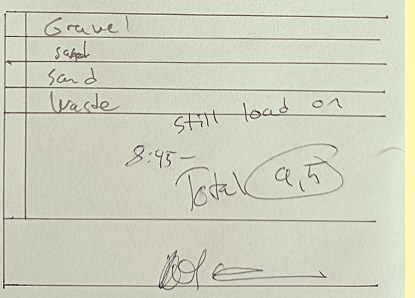
This is the thing the whole day currently runs on. Chasing it down, reading the handwriting, keying it in, and writing off the ones that never turn up works out at $9.50 a ticket.
A real ticket — materials written in, hours totalled by hand, and no copy of it anywhere else.
Work out your own number →
Status
Business number, work safety number, who it's billed to and when it's due — filled in the same way every time, off the tickets behind it. Approve the job and the invoice is finished the same day, ready to download and send.
The invoice one logged ticket built — your numbers on it, nothing typed in twice.
Not a feature tour. Four jobs the product does, described the way you'd describe them yourself — including, where it matters, where each one stops.
Set the project up once — which trucks, which drivers, what's moving — and every ticket logged against it lands back on that plan. Attainment, fill rate, how the day is actually going versus how you drew it.
Per project, on the projects you set up. There's no fleet-wide control tower behind this, and we'd rather say so than let you find out later.
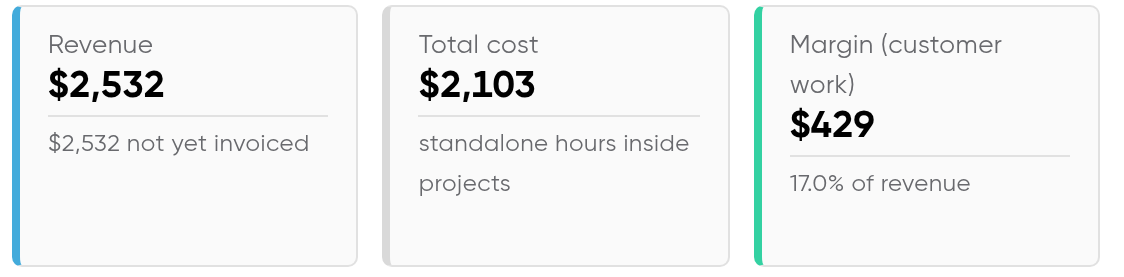
See the planning screens →Profit and loss built straight out of the tickets — project by project, and across every project at once. The margin on a job is a screen you open, not a spreadsheet somebody rebuilds at month end.
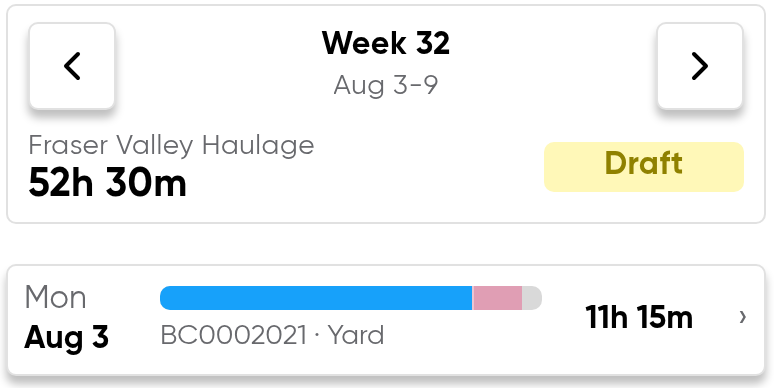
Open the P&L →Drivers submit their hours from the phone; you review and approve them. What comes out the other side is a clean, approved set of hours instead of a shoebox of slips to reconcile.
Tragget isn't a payroll service — it doesn't cut cheques and it doesn't file taxes. It's what you hand payroll instead of the shoebox.
See the hour sheet →An owner-operator hauling for you turns their own ticket into a proper invoice, in their own name, from the phone — no improvising a template, no paying someone to write it up.
This one is for freelance drivers only. Drivers on your payroll are paid from their timesheet instead, and never see an invoice screen.
See the invoicing →A bookkeeper. Whoever assembles hours before payroll. Here's what Tragget takes off that bill.
Keying tickets into invoices, then working out after the fact whether the job made money.
The ticket becomes the invoice. Approve it and it's finished the same day — ready to download and send — and the same numbers land in your project and company P&L without anyone re-typing them. On the numbers behind our pricing, pushing paper runs about $9.50 a ticket against about $1.15 on Tragget — roughly $1,044 a month at 125 tickets.
Chasing driver hours across paper and spreadsheets before every payroll run.
Every hour, not most of them. Drivers submit from the phone, you approve, and what comes out is the finished set of hours — nothing left to chase down or reconcile before the payroll run. Tragget isn't the payroll system itself — it doesn't file taxes or move the money — it hands that system hours it can pay straight from.
Your ticket count, your bookkeeping rate, your share of tickets that never make it onto an invoice. The calculator shows its arithmetic and its assumptions in full, so you can argue with it.
Trucking work shouldn't only go to friends-of-friends. Tragget opens dispatch up — list your fleet, get verified, and get hired by contractors who need trucks today, with every ticket captured for accurate, instant invoicing.