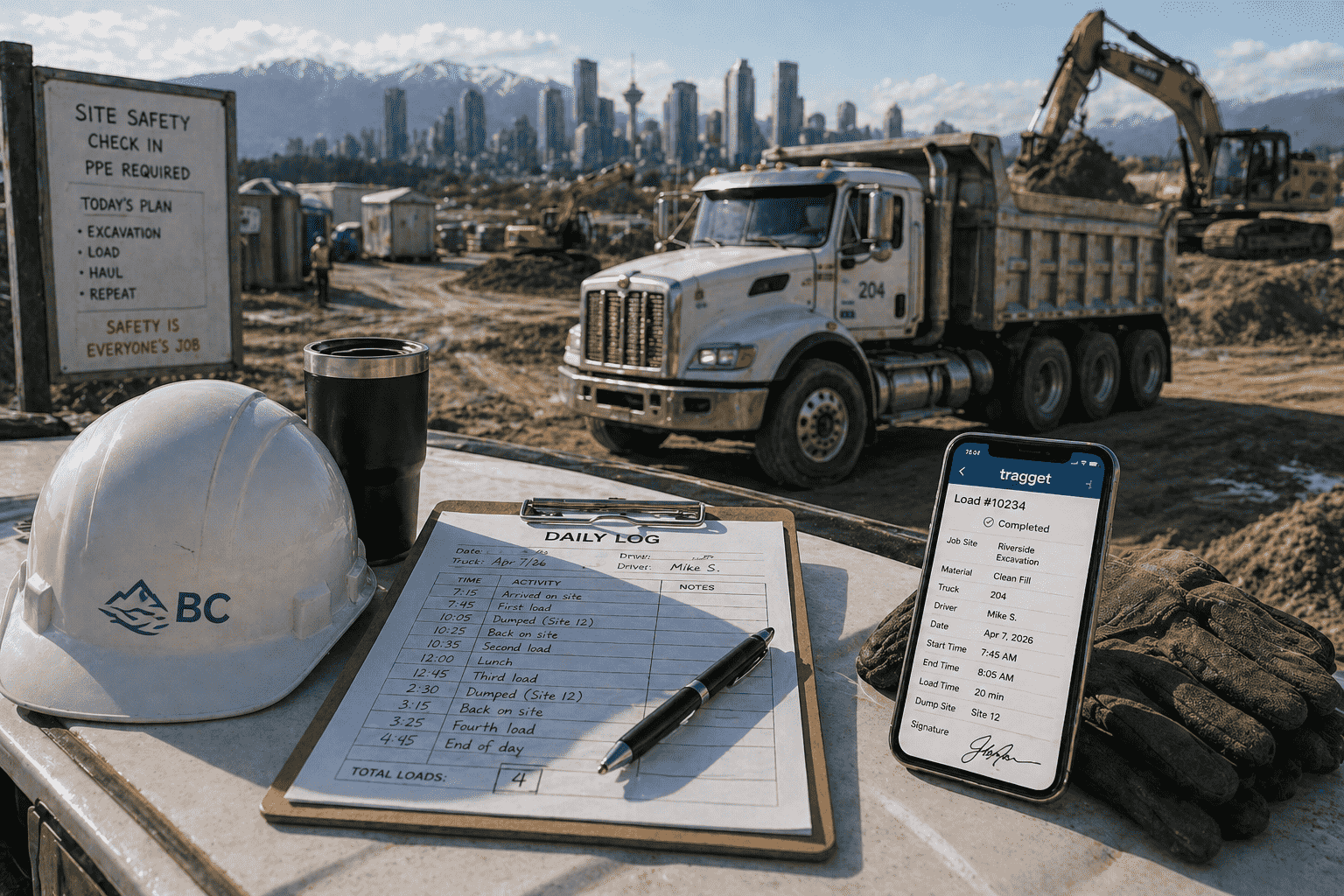
May in BC means one thing for dump truck operators: the phones start ringing. Construction season is back, excavation crews are mobilizing, and dispatchers are pulling every available truck they can find.
If you are an owner-operator or running a small fleet, this is the moment that sets the tone for your entire season. Get the first few dispatches right and you build momentum. Get them wrong and you spend the next six months untangling billing disputes, chasing paper tickets, and losing jobs to operators who look more professional.
Here are five things worth getting right before your first dispatch of 2026.
1. Know your rate — and have it in writing
Verbal agreements fall apart fast in a busy season. Before you take a single load, confirm your hourly or per-load rate with the dispatcher or GC in writing — even a text message is better than nothing. BC’s Prompt Payment and Construction Lien Act gives you enforceable payment timelines, but only if you can document what was agreed.
Common disputes start exactly here: the operator thought it was $95/hour, the contractor thought $85. Lock it in before wheels turn.
2. Confirm site access and load details upfront
Nothing kills your day rate faster than showing up to a site that is not ready — locked gate, no operator on site, or a load that is not staged. Before dispatch, confirm:
- Site address and gate access code
- Who to check in with on arrival
- Material type and estimated loads
- Dump site location and acceptance requirements
Ten minutes of confirmation saves two hours of waiting on the clock at no charge.
3. Get your ticketing system straight
Paper tickets are still the norm on most BC job sites — but they are also the number one source of billing disputes. Tickets get wet, lost, or illegible. Drivers forget to get them signed. Contractors claim loads were never made.
If you are still running paper, every load you haul this season is a potential dispute. A digital ticketing system like Tragget timestamps each load automatically, captures driver confirmation, and gives both you and the contractor a clean record. No paperwork to chase at month-end.
Start the season with clean records and you will invoice faster and get paid faster.
4. Set your availability expectations early
Good dispatchers remember which operators show up and which ones are hard to reach. This season, decide how you want to handle call-outs:
- What is your minimum notice for a dispatch?
- Are you available weekends?
- How do you handle last-minute cancellations?
Setting these expectations at the start of a relationship — rather than mid-season when tensions are high — keeps things professional and protects your working relationships.
5. Track your idle time from day one
Idle time is the silent killer of owner-operator margins. If you are waiting at a site for 90 minutes between loads, that time either gets paid or it does not — and if you are not tracking it, you will not be able to invoice for it or make the case to your dispatcher that something needs to change.
Keep a log from your very first dispatch of the season. Note arrival times, first-load times, and end-of-day times. After two weeks you will have the data to either bill correctly or have a direct conversation about site efficiency.
Start strong, stay sharp
BC’s 2026 construction season is competitive. More operators are chasing a tighter pool of jobs, and GCs are getting more selective about who they call back. The operators who show up on time, bill cleanly, and document their work are the ones who stay busy all summer.
Try Tragget free — 5 hauls on us. No card. tragget.com