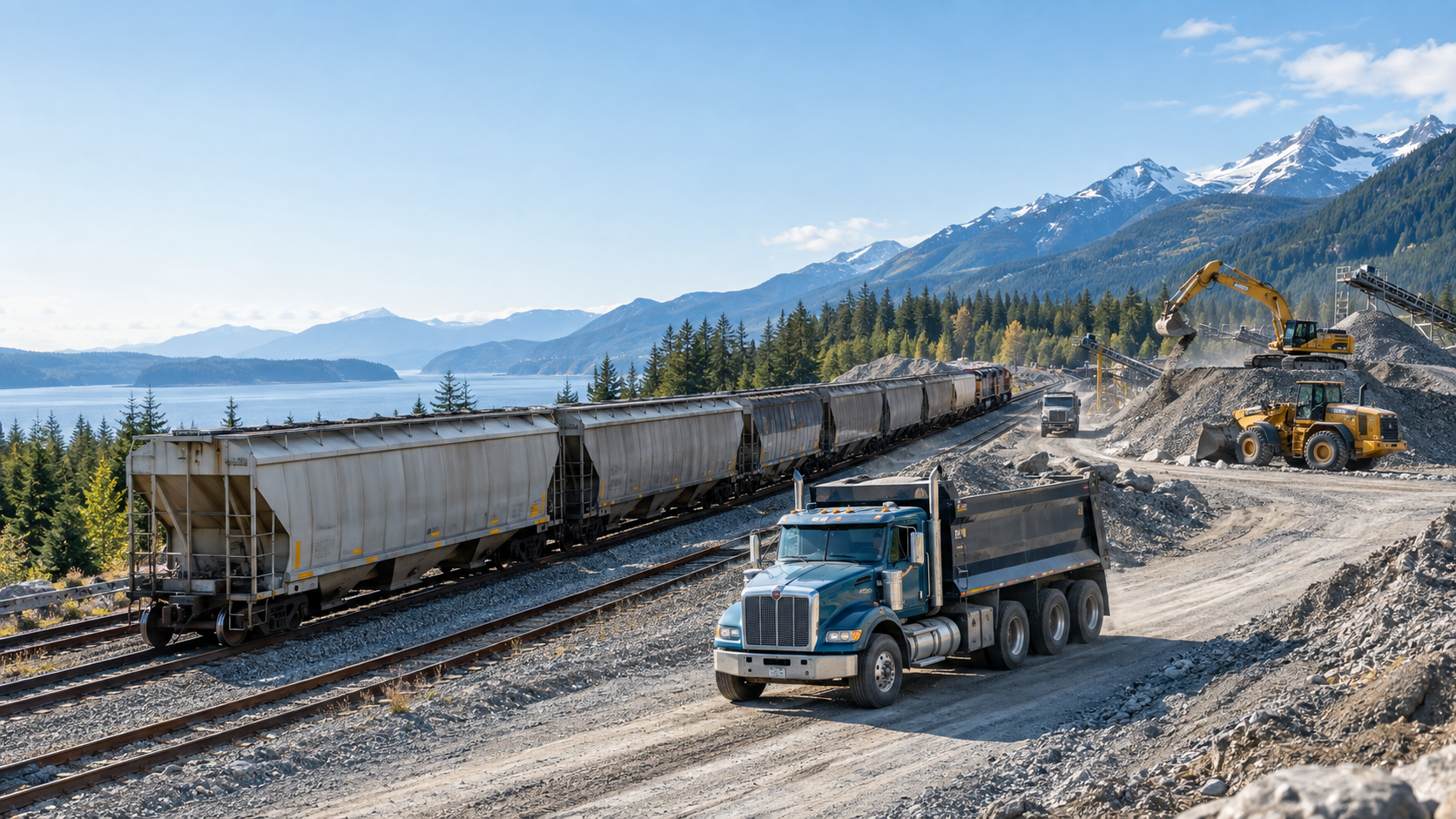
Ottawa just announced a $4.7 billion investment to build 313 new Via Rail passenger cars at the Alstom plant in Thunder Bay, Ontario — the largest single investment in Via Rail's history, and the first passenger cars built in Canada in 40 years.
Money like that doesn't stay contained to one rail yard. Investments at this scale move through the supply chain — more materials, more site work, more excavation and earth-moving before a single rail car ever gets welded. For excavating and earth-moving contractors, announcements like this are an early signal: more construction is coming, and it tends to arrive in a rush once funding is committed.
The question worth asking isn't about rail cars. It's whether your business is set up to handle the next wave of work when it hits — or whether you're still running it the way earth-moving crews have for decades: drivers hand-writing load tickets on carbon-copy paper that gets photographed, texted back to an office, or occasionally lost in a cab altogether.
That's fine at a steady, predictable pace. It gets expensive fast when volume spikes — more tickets to chase, more room for a number to get mis-keyed, more invoices that go out late because someone's still tracking down a paper slip from three days ago. Tragget customers who move their tickets off paper save an average of $1,044 a month, about $8.35 per ticket — not from new equipment, but simply from no longer losing, misreading, or re-keying tickets by hand.
A $4.7 billion federal investment is a reminder that when the work is there, the businesses ready to run differently are the ones who capture it without the growing pains. Digitizing your tickets doesn't need a construction boom to justify it — but if one's coming, now's a good time to stop relying on pen and paper before the volume makes that decision for you.