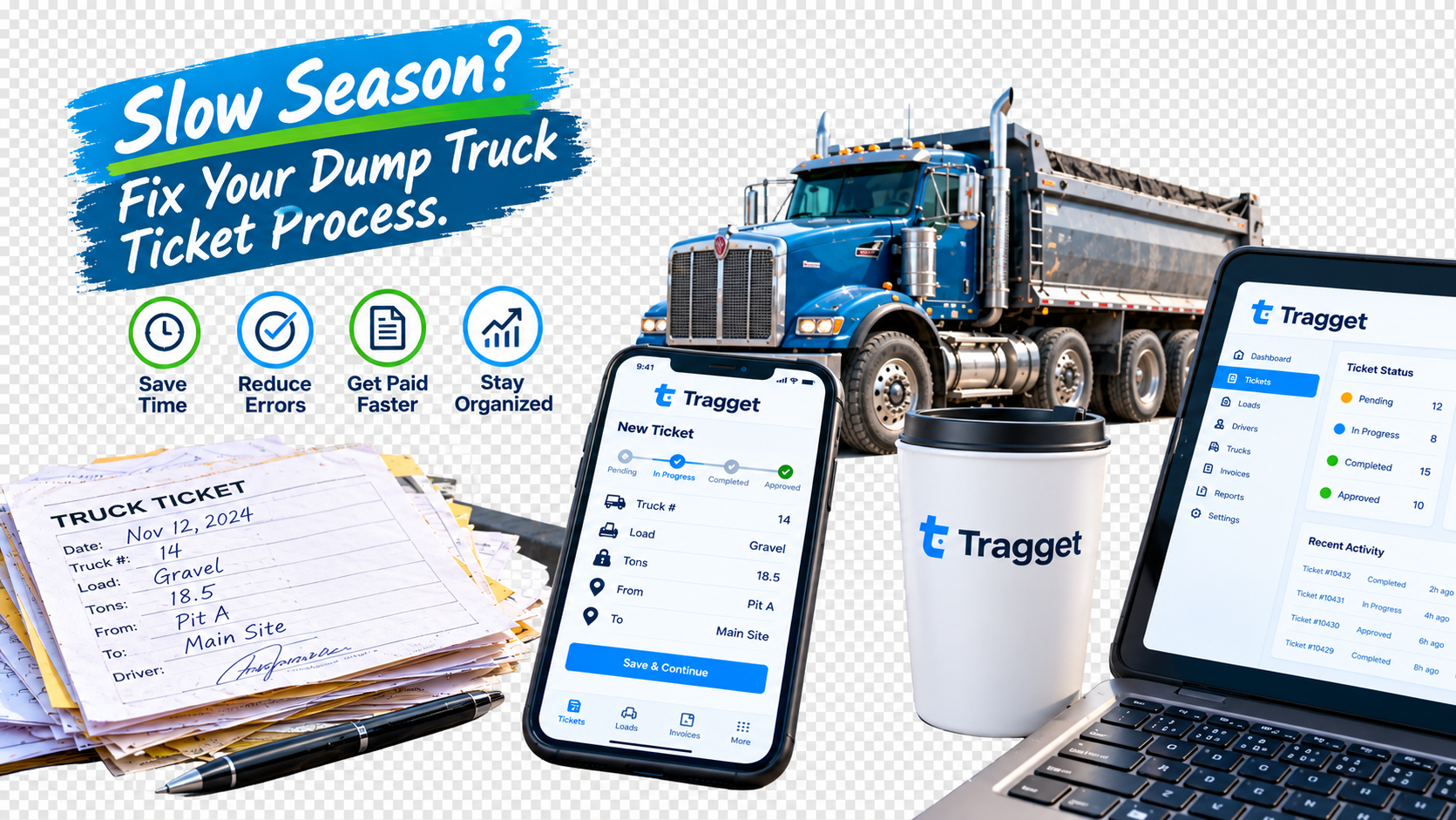
When the schedule loosens up for the winter, most dump truck and excavating operators do the same thing: park what they can, catch up on the books, and promise themselves they'll sort out the paperwork "once things settle down." Then spring hits, every truck is booked, and the stack of slips in the cab is back.
If your tickets are still on paper, or on photos texted to the office, this is the cheapest moment of the year to change that. Nobody is waiting on a slip. Nobody is behind on invoices because of a Monday rush. You can look at the process while it isn't on fire.
Where the money goes on paper
Paper tickets cost you in three places, and none of them show up as a line on a statement:
- Re-keying. Someone types every slip into a spreadsheet or invoice. That's bookkeeper time on work that was already done once in the cab.
- Lost or illegible slips. A ticket that goes missing is a load you did but can't bill cleanly.
- Slow invoices. Billing waits on whoever is still chasing the last few slips, so cash comes in later than the work did.
A worked example, with the assumptions shown
For a single operator running about 125 tickets a month at roughly $900 a load, with a bookkeeper at $40 an hour processing about 8 tickets an hour and about 0.5% of tickets getting lost, paper works out to around $9.50 per ticket. Handling the same ticket in Tragget works out to around $1.15. That gap is $8.35 a ticket, or about $1,044 a month for that operator. Your numbers will differ. Swap in your own volume and see where you land.
Do it small, and do it in the slow season
You don't need a big switchover, and we won't pretend you do. Here's the low-stakes version:
- Sign up on your own account. No call and no coordination with anyone you haul for.
- Take one real job you've already wrapped and log its tickets.
- Name the customer on the invoice and approve a ticket in the system.
- You'll have a ready-to-send invoice built from the ticket, and you can add a custom line (wait time, fuel, whatever the job cost you) before you send anything.
One job tells you whether the process fits how you run. By the time the work picks back up, the tickets are already flowing the way you want them to.
Slow season doesn't last. The habits you set while it's quiet are the ones you'll be running when it isn't.
Try it on one finished job: sign up.